Botanika
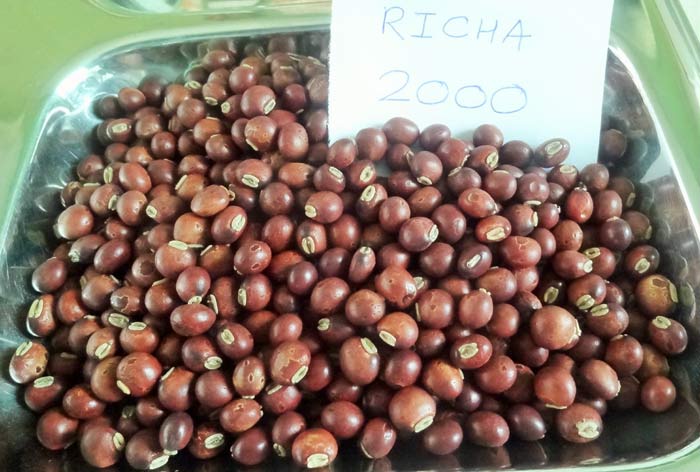
1 Kg Richa 2000 Pigeon Pea Seeds, Cajanus cajan, Dual-Purpose Grain & Supplementary Fodder
1 Kg Richa 2000 Pigeon Pea Seeds, Cajanus cajan, Dual-Purpose Grain & Supplementary Fodder
Verfügbarkeit für Abholungen konnte nicht geladen werden
Richa 2000 Perennial Pigeon Pea Seeds (Cajanus cajan)
Dual-Purpose Grain Crop and Supplementary Livestock Fodder
Richa 2000 is an improved, persistent pigeon-pea variety developed by Indian farmer-innovator Rajkumar Rathore. It has a bushy growth habit, abundant branching, clustered pod formation and the ability to provide more than one pod harvest under suitable conditions.
Pigeon pea is mainly cultivated for its edible seeds. Its leaves, tender stems, pods and threshing residues can also provide supplementary fodder for cattle, buffaloes, goats and sheep.
International Orders
Phytosanitary certification and trackable worldwide shipping are included in the price.
Key Features
-
Persistent or perennial-type pigeon pea
-
Dual-purpose grain and supplementary fodder crop
-
Bushy plant with abundant branches
-
Clustered pod formation
-
May provide two pod harvests annually under suitable conditions
-
Deep-rooted and drought tolerant
-
Suitable for warm tropical and subtropical climates
-
Leaves and pods provide supplementary livestock forage
-
Fixes atmospheric nitrogen
-
Useful as a cover crop, hedge and soil improver
-
Stems may be used as fuel after harvest
Botanical Information
-
Crop: Pigeon pea, Arhar or Toor
-
Botanical name: Cajanus cajan
-
Variety: Richa 2000
-
Plant type: Short-lived perennial legume shrub
-
Primary use: Grain production
-
Secondary use: Supplementary livestock fodder
Richa 2000 Characteristics
Richa 2000 is reported to produce:
-
Bushy and persistent plants
-
Approximately 12–14 branches per plant
-
Clustered pods near the upper parts of the plant
-
Approximately 700–800 pods per plant under favourable conditions
-
More than one pod harvest in suitable climates
The National Innovation Foundation has reported annual grain-yield potential of up to approximately 24 quintals per acre. This is a potential figure and not a guaranteed commercial yield.
Actual performance depends on seed authenticity, climate, soil, rainfall, plant population, pests and crop management.
Fodder Value
Pigeon-pea foliage generally contains approximately:
-
Crude protein: 10–27% of dry matter
-
Digestibility: Approximately 50–60%
Young leaves may contain more than 20% crude protein, while older leaves can contain less protein and more fibre. Fodder quality varies with plant age, variety, growing conditions and harvest stage.
Richa 2000 has not been separately tested as a formally released fodder cultivar. Its fodder value should therefore be described using general pigeon-pea information.
Suitable Livestock
Pigeon-pea foliage may be offered as supplementary feed for:
-
Cattle
-
Buffaloes
-
Goats
-
Sheep
Leaves, developing pods and tender stems are generally more suitable for feeding than old, woody branches.
Growing Conditions
-
Climate: Tropical and subtropical
-
Temperature: Warm, frost-free conditions are preferred
-
Rainfall: Suitable for rainfed and seasonally dry regions
-
Soil: Adaptable to several soil types
-
Drainage: Requires well-drained soil
-
Sunlight: Full sunlight
-
Waterlogging: Sensitive to prolonged waterlogging
-
Salinity: Not recommended for highly saline soil
Its deep taproot helps established plants tolerate dry periods and access moisture and nutrients from deeper soil layers.
Sowing and Establishment
Prepare a clean, well-drained seedbed and sow directly in rows. Use wider spacing than short-duration pigeon-pea varieties because Richa 2000 develops a large, branching canopy.
Seed rate and spacing should follow the seed producer’s recommendations for grain or dual-purpose production. Dense planting intended only for forage may reduce branching and pod yield.
Protect young plants from heavy grazing until their stems and root systems are properly established.
Fodder Harvesting
Pigeon pea may be harvested for forage at the pre-flowering stage or when the first pods begin developing.
For taller plants:
-
Cut approximately 50–75 cm above ground level
-
Leave sufficient branches and leaves for regrowth
-
Allow plants to regrow to approximately 150 cm before cutting again
Very low cutting can weaken or kill the plants. Heavy and continuous grazing should be avoided.
Grain and Fodder Management
Harvesting large amounts of foliage can reduce flowering, pod formation and grain yield. Farmers should decide whether the crop is being managed mainly for:
-
Grain production
-
Supplementary fodder
-
A planned combination of grain and fodder
When grain is the main objective, use only limited pruning or feed the leaves, pod husks and threshing residues remaining after harvest.
Feeding Guidance
Introduce pigeon-pea foliage gradually and combine it with grass, hay, straw, maize stover or another established fodder.
Pigeon-pea forage contains useful protein but can also be fibrous and relatively low in energy. It should not be used as the animal’s complete diet or as the only feed for high-producing dairy animals.
A livestock nutritionist can recommend an appropriate inclusion level based on the animal’s age, production stage and total ration.
Other Uses
Richa 2000 pigeon pea may also be used for:
-
Grain and dal production
-
Supplementary livestock fodder
-
Green manure
-
Cover cropping
-
Nitrogen fixation
-
Soil-structure improvement
-
Erosion-control hedges
-
Windbreaks
-
Mulch
-
Bee forage
-
Fuel from dried stems
International Orders
Phytosanitary certification and trackable worldwide shipping are included in the price.
Share