Botanika
1 Kg Sesbania grandiflora Seeds – Protein-Rich Livestock Feed | Worldwide Shipping
1 Kg Sesbania grandiflora Seeds – Protein-Rich Livestock Feed | Worldwide Shipping
Verfügbarkeit für Abholungen konnte nicht geladen werden
Agathi Fodder Tree Seeds (Sesbania grandiflora)
Protein-Rich Leaf Fodder for Ruminant Livestock
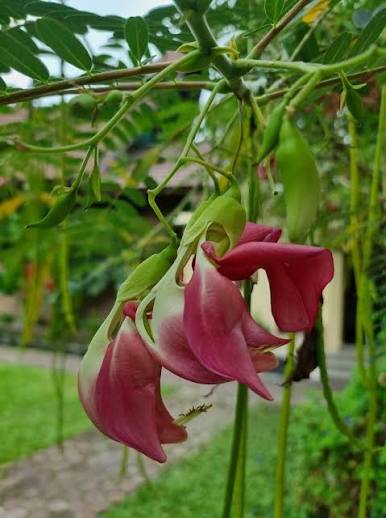
Agathi, also known as Agati, Vegetable Hummingbird or Hummingbird Tree, is a fast-growing perennial legume tree. Its botanical name is Sesbania grandiflora (L.) Pers.
The leaves and young shoots are used as supplementary fodder for cattle, buffaloes, goats and sheep. Agathi is especially useful in cut-and-carry feeding systems and can provide green leaf fodder during periods when other forage is limited.
International Orders
Phytosanitary certification and trackable worldwide shipping are included in the price
Key Features
-
Fast-growing perennial fodder tree
-
Produces protein-rich leaves and young shoots
-
Suitable for cattle, buffaloes, goats and sheep
-
Useful for cut-and-carry feeding
-
Provides repeated harvests after establishment
-
Fixes atmospheric nitrogen
-
Helps improve soil fertility
-
Suitable for farm boundaries and mixed-farming systems
-
Can tolerate poorly drained and seasonally wet soils
-
Flowers and young leaves are also used as food in some countries
Nutritional Value
Agathi foliage contains approximately 25–30% crude protein on a dry-matter basis. It is generally palatable to ruminant livestock and can be used to supplement grass, straw and crop-residue diets.
Nutritional content varies with plant age, soil fertility, climate and harvesting management.
Growing Conditions
-
Climate: Humid tropical and warm subtropical regions
-
Preferred temperature: Approximately 22–30°C
-
Sunlight: Full sunlight
-
Soil: Adaptable to several soil types
-
Water: Regular moisture supports rapid growth
-
Cold tolerance: Does not perform well in cold or frosty climates
-
Wind: Protect young trees from strong winds
Agathi can grow in clay, alkaline, moderately saline and poorly drained soils. However, local soil conditions and water availability will influence growth and fodder production.
Sowing Information
-
Suggested seed rate: Approximately 7.5 kg per hectare for fodder production
-
Suggested spacing: Approximately 1 × 1 metre
-
Sowing method: Sow directly in prepared soil or raise seedlings before transplanting
-
Sowing depth: Cover the seeds lightly with soil
-
Watering: Keep the soil moist during germination and early establishment
Seed treatment or scarification may improve germination where the seed coat is hard. Follow the germination and treatment information supplied with the seed lot.
Harvesting
First harvest:
The first substantial fodder harvest may be taken approximately eight months after sowing, once the trees are strong enough to tolerate cutting.
Subsequent harvests:
Later harvests may generally be taken every 60–80 days, depending on temperature, rainfall, irrigation and regrowth.
Avoid severe or excessively frequent cutting. Retain enough branches and foliage to support healthy regrowth.
Yield Potential
Under irrigated conditions and suitable management, TNAU reports green-fodder production of up to approximately 100 tonnes per hectare per year.
This is a potential figure, not a guaranteed yield. Actual production depends on plant density, climate, soil fertility, irrigation, pruning and crop age.
Suitable Uses
-
Supplementary green livestock fodder
-
Cut-and-carry feeding
-
Goat and sheep forage
-
Cattle and buffalo feed
-
Dry-season leaf fodder
-
Farm-boundary planting
-
Green manure and soil improvement
-
Mixed crop-livestock farming
Agathi is not well suited to uncontrolled direct grazing because livestock may damage its branches and growing points.
Feeding Guidance
Use Agathi leaves and young shoots as a supplement, not as the animal’s complete diet. Introduce the foliage gradually and mix it with grass, hay, straw or other fodder.
Because Agathi contains naturally occurring plant compounds such as saponins and tannins, a conservative recommendation is to keep it below approximately 30% of the total ration dry matter unless a qualified livestock nutritionist recommends otherwise.
Do not feed Agathi foliage to poultry as a general feed ingredient without specialist formulation and advice.
International Orders
Phytosanitary certification and trackable worldwide shipping are included in the price.
Germination, harvest time, nutritional value and yield depend on the seed lot, climate, soil, irrigation and crop management.
Share