Botanika
1 Kg African Tall Fodder Maize Seeds (Zea mays Seeds ) , Worldwide Shipping
1 Kg African Tall Fodder Maize Seeds (Zea mays Seeds ) , Worldwide Shipping
No se pudo cargar la disponibilidad de retiro
High-Yield Green Fodder for Livestock
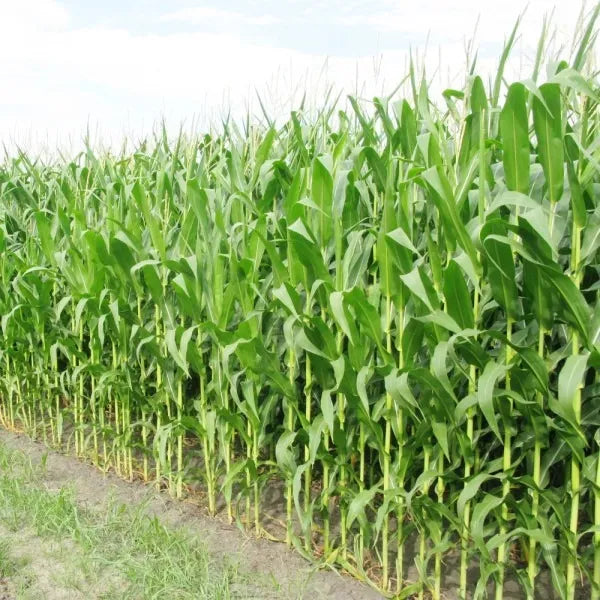
African Tall is a popular composite fodder-maize variety grown for producing tall, leafy and nutritious green forage. It is suitable for cattle, buffaloes, goats, sheep and other livestock.
The crop produces substantial green biomass with soft stems and several broad leaves. It can be fed fresh or harvested at the milk stage for silage production.
International Orders
Phytosanitary certification and trackable worldwide shipping are included in the price.
Key Features
-
Tall and leafy fodder-maize variety
-
High green-fodder production
-
Suitable for fresh feeding and silage
-
Average plant height of approximately 3 metres or 10 feet
-
Approximately 13 leaves per plant under favourable conditions
-
Suitable for dairy cattle, buffaloes, goats and sheep
-
Annual, single-cut forage crop
-
Performs well under irrigated cultivation
-
Can be intercropped with a suitable forage cowpea
Crop Details
-
Common name: African Tall Maize
-
Botanical name: Zea mays L.
-
Crop type: Annual fodder cereal
-
Growth habit: Tall and upright
-
Plant height: Approximately 9–11 feet
-
Dry matter: Approximately 17.65%
-
Crude protein: Approximately 9.8%
-
Seed rate: Approximately 40 kg per hectare
-
Seed rate per acre: Approximately 16 kg
-
Spacing: Approximately 30 × 15 cm
-
Preferred climate: Warm, frost-free growing conditions
-
Soil: Fertile, well-drained soil
-
Sunlight: Full sunlight
Feed composition varies with soil fertility, crop age, harvest stage and growing conditions.
Sowing and Cultivation
Prepare a fine, weed-free seedbed. Sow one seed at approximately 15 cm spacing, with about 30 cm between rows.
Apply manure and fertilizer according to a soil test and local agricultural recommendations. Adequate nitrogen is important for leafy growth, but excessive nitrogen should be avoided.
Keep the soil moist during germination and establishment. Irrigation frequency should be adjusted according to temperature, rainfall and soil type. Avoid prolonged waterlogging.
Harvesting
Harvest African Tall maize when the cobs reach the milk stage. At this stage, the crop normally provides a good balance of biomass, moisture, digestibility and energy.
African Tall is generally harvested once. It should not be advertised as a multi-cut or perennial fodder variety.
Yield Potential
Under suitable conditions and good management, African Tall may produce approximately:
-
40–60 tonnes of green fodder per hectare
-
Approximately 16–24 tonnes per acre
Actual yield depends on seed quality, climate, soil fertility, irrigation, plant population and harvesting stage.
Uses
African Tall fodder maize can be used for:
-
Fresh green livestock feeding
-
Cut-and-carry fodder
-
Dairy cattle and buffalo feed
-
Goat and sheep fodder
-
Chaffing and mixed livestock rations
-
Silage production
-
Commercial green-fodder farming
Silage Production
For silage, harvest the whole plant around the milk to early-dough stage, according to local silage recommendations. Chop the plants into small pieces, compact them tightly to remove air and seal them in a suitable pit, bag, drum or silo.
Correct crop moisture and airtight storage are essential for producing good-quality silage.
Feeding Guidance
Chop the plants before feeding to reduce waste and make the fodder easier for livestock to consume. Introduce it gradually and use it as part of a balanced ration.
Do not claim that African Tall maize alone will guarantee higher milk production or animal weight gain. Livestock performance depends on the animal’s complete diet, health, breed and management.
International Orders
Phytosanitary certification and trackable worldwide shipping are included in the price.
Share