Botanika
1 kg Desmanthus CO 2 Fodder Seeds – Desmanthus virgatus | Phytosanitary Certificate
1 kg Desmanthus CO 2 Fodder Seeds – Desmanthus virgatus | Phytosanitary Certificate
Impossible de charger la disponibilité du service de retrait
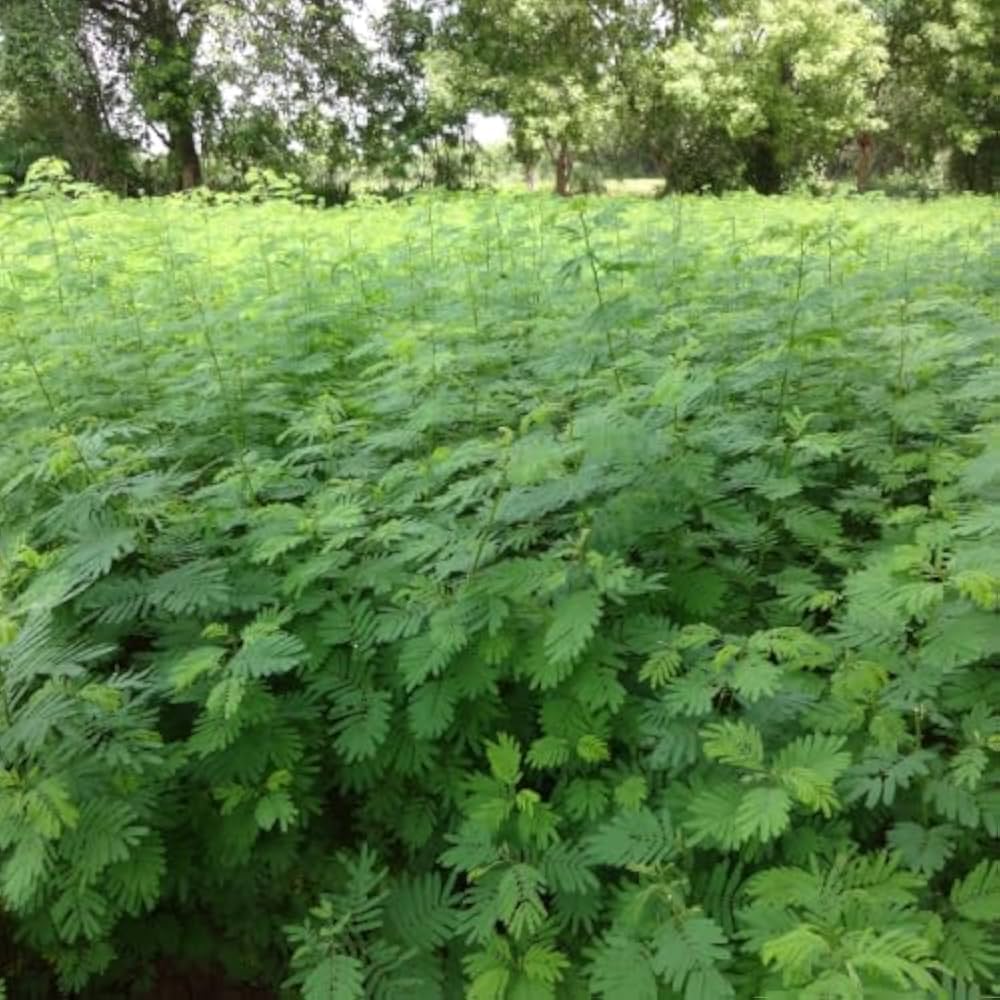
Desmanthus CO 2 is a high-yielding perennial fodder variety capable of producing approximately 130 tonnes of green fodder per hectare annually under recommended cultivation and favourable growing conditions. The established crop can provide around seven harvests per year, making it suitable for dairy farms, livestock farms and commercial green-fodder production.
Also known as Velimasal or Hedge Lucerne, Desmanthus CO 2 produces nutritious, protein-rich leafy forage with good regrowth after cutting. It is suitable for cattle, dairy cows, buffaloes, goats and sheep.
Fodder Uses
-
Produces nutritious, protein-rich green fodder.
-
Suitable for cattle, buffaloes, goats and sheep.
-
Provides repeated harvests from one establishment.
-
Can be fed fresh, chopped or mixed with grass fodder.
-
Useful for pasture development and year-round fodder systems.
-
As a leguminous crop, it can contribute to soil fertility through biological nitrogen fixation.
-
Suitable for mixing with cereal fodders to create a more balanced livestock ration.
Planting Instructions
-
Growing season: Sow throughout the year under irrigated conditions. For rain-fed cultivation, sow at the beginning of the rainy season.
-
Soil: Suitable for different soil types but performs best in fertile, well-drained soil.
-
Seed rate: Approximately 20 kg per hectare.
-
Land preparation: Plough the field two or three times to obtain a fine, weed-free seedbed.
-
Field layout: Prepare ridges and furrows approximately 50 cm apart.
-
Sowing: Sow the treated seeds shallowly in moist soil and cover lightly.
Seed Treatment
Desmanthus seeds have a hard seed coat and require treatment for improved germination:
-
Place the seeds in hot water at approximately 80°C for five minutes.
-
Remove and wash the seeds with cold water.
-
Soak them in cold water overnight.
-
Shade-dry the treated seeds before sowing.
Irrigation and Crop Care
-
Irrigate immediately after sowing.
-
Provide a light irrigation on the third day.
-
Continue irrigation approximately every 10 days, depending on soil moisture, rainfall and climate.
-
Carry out the first weeding approximately 25 days after sowing.
-
Perform additional weeding when necessary.
-
Apply farmyard manure and fertilizer according to local soil-test recommendations.
Maturity and Harvest
-
Growth habit: Perennial, multicut fodder crop.
-
First harvest: Approximately 90 days after sowing.
-
Subsequent harvests: Approximately every 50 days.
-
Expected harvests: Around seven cuts annually under favourable management.
-
Potential green-fodder yield: Approximately 130 tonnes per hectare per year.
-
Harvesting method: Cut above ground level while leaving sufficient stem and growing points for healthy regrowth.
-
Regular irrigation, fertilization and timely harvesting promote tender foliage and continued production.
Feeding Guidance
Introduce fresh Desmanthus fodder gradually and feed it as part of a balanced ration. For best results, combine it with suitable grass or cereal fodder. Feeding requirements vary by animal type, age, weight and production stage; consult a livestock nutritionist or veterinarian when planning rations.
Phytosanitary Certificate Shipping Is Included and Tracking will be provided
The seeds are supplied with a phytosanitary certificate for international shipping
Yield, germination, maturity and harvesting intervals may vary according to climate, soil fertility, irrigation, seed storage and local cultivation practices.
Share